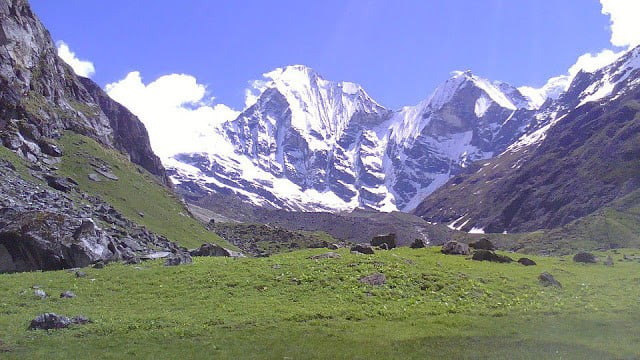
Api Nampa Mountain
Mount Api (7,132m) and Mount Nampa (6,757m) are the highest peaks in the Gurans Himal range, located in the remote Darchula District of far-western Nepal. They form the core of the Api Nampa Conservation Area, a pristine, less-traveled region known for rich biodiversity, including snow leopards, and rich cultural traditions.Key Details of Api Nampa Mountains:- Location: Darchula District, Sudurpashchim Province, bordering India and Tibet.
- Highest Peaks: Mt. Api (7,132m / 23,399ft) and Mt. Nampa (6,757m).
- Landscape: Features glaciers, high-altitude meadows, and deep river valleys.
- Conservation Area: The Api Nampa Conservation Area (1,903km2) was established in 2010 to protect its unique ecosystem.
- Trekking: Offers remote trekking opportunities to the Api Base Camp, with views of peaks like Nandadevi, Rajramba, and Kappa Chuli.
- Culture: The area is home to the Byasi and Sauka tribes, with traditions including sheep herding and weaving.
Key Attractions & Activities:- Api Base Camp Trek: An emerging, non-touristy trek offering solitude and wilderness.
- Biodiversity: Habitat for rare species like the snow leopard, musk deer, clouded leopard, and ghoral.
- Cultural Experience: Exploration of traditional, isolated villages.
- Yarshagumba Collection: High-altitude medicinal herb collection is a significant local activity.
The region is known as "Nepal's young conservation area" and offers a raw, authentic
Wildlife Wonders in Api Nampa
Thanks to its immense altitudinal and climatic diversity, ANCA is a haven for rare and endangered Himalayan species:
Mammals
- Snow leopard (Uncia uncia) – Elusive highland predator (Endangered)
- Red panda (Ailurus fulgens) – Rarely spotted in ANCA's temperate forests
- Himalayan black bear, Himalayan musk deer, Himalayan tahr, serow, goral, and langur monkeys
- Occasional sightings of grey wolves and jackals
Birds
- Himalayan monal (Danphe) – Nepal’s national bird
- Snowcock, blood pheasant, red-billed and yellow-billed choughs
Flora and NTFPs
- Rich in medicinal and aromatic plants:
Panchaunle, Sarpagandha, Sugandhawal, and Cordyceps (Yarsagumbu)
Climate and Ecosystems
ANCA exhibits three major climatic zones:
- Subtropical – Found in lower valleys, supporting broadleaf forests
- Temperate – Mid-elevations with pine, oak, and rhododendron forests
- Alpine and Arctic – High-altitude meadows and glacial zones under snow most of the year
More than 80% of rainfall occurs during the monsoon (June to September), while winter months are cold and dry. Temperatures range from 18.6°C (max) to 7.7°C (min), with snowfall common above 3,500m.
Getting There
From Nepal:
- Kathmandu → Dhangadhi: By daily flight or overnight bus
- Dhangadhi → Darchula HQ (Khalanga): Local buses available
- After crossing the Mahakali River (natural Nepal–India border), you enter the conservation area.
Trekking:
Multiple trails start from villages like Naugad, Lasku, or Ghajir, offering access to untouched wilderness and remote cultural settlements.
Travel Essentials and Facilities
- Permits:
- Entry fee of NPR 1,000 from NTB office or ANCA gates
- Lodging:
- Basic tea houses and moderate hotels available in lower valleys
- Medical:
- Limited in remote areas—carry a full first-aid kit
- Connectivity:
- Patchy cellular network; carry a power bank and offline maps
- Regulations:
- No travel between sunset and sunrise
- Flora and fauna are protected—do not disturb or collect
- Avoid single-use plastics—pack out all waste
Conservation with Community
The Api Nampa Conservation Area represents a modern model of integrated conservation, where government protection meets local community stewardship. The area is managed under Nepal’s Conservation Area Government Regulation, ensuring both ecological protection and socio-economic development for the region’s residents.
Nepal’s shift from species-focused conservation to a landscape-level approach is clearly seen here, where the well-being of people and ecosystems are intrinsically linked.
Why Visit Api Nampa?
Best Time to Visit
- Spring (March–May): Clear skies, blooming flora, pleasant weather
- Autumn (Sept–Nov): Best for wildlife sightings and mountain views
- Avoid Monsoon and Winter: Rain and snow can block trails